
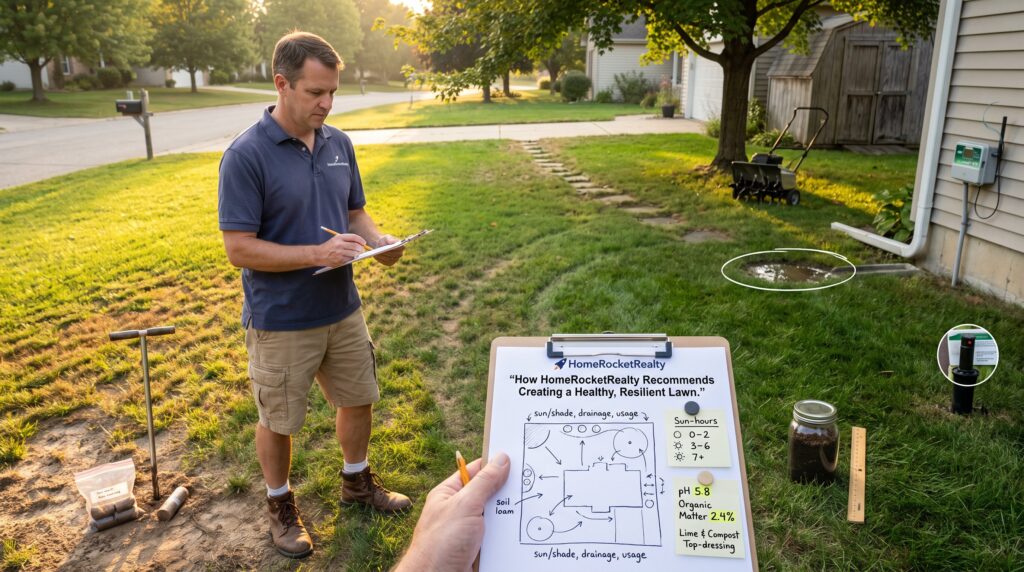
How HomeRocketRealty Recommends Creating a Healthy, Resilient Lawn starts with clear choices: assess soil, pick the right grass, and commit to simple, seasonal practices. In 2026, buyers notice yards that look intentional. A resilient lawn reduces cooling costs, prevents erosion, and boosts curb appeal that influences offers. This guide gives homeowners practical, tested steps, soil testing, mowing rules, water targets, eco-friendly pest tactics, and smart tools, so readers can turn a tired yard into a low‑maintenance, high‑value landscape that pays back in comfort and resale value.
Table of Contents
ToggleKey Takeaways
- HomeRocketRealty emphasizes that creating a healthy, resilient lawn starts with soil assessment, selecting the right grass, and committing to seasonal maintenance practices.
- A resilient lawn not only boosts curb appeal and home value but also reduces cooling costs and prevents erosion, making it a smart investment.
- Core lawn care practices include proper mowing, deep and infrequent watering, tailored fertilizing based on soil tests, and aeration to alleviate compaction.
- Seasonal care involves specific actions like spring soil testing, summer pest monitoring, fall aeration and overseeding, and winter planning for sustained lawn health.
- Eco-friendly pest and weed management focuses on prevention, mechanical controls, spot treatments, and fostering beneficial organisms.
- Using technology such as soil moisture sensors, smart irrigation controllers, and robotic mowers can optimize lawn care and reduce maintenance efforts.
Why A Healthy Lawn Matters For Home Value, Energy Use, And Neighborhood Appeal
A healthy lawn raises perceived home value, reduces energy loads on a house, and lifts neighborhood appeal. When a property shows a dense, green lawn, buyers often imagine a cared‑for home and will pay more. Lawns also lower surface temperatures: cool turf absorbs and evaporates heat, reducing air conditioning demand on hot days. For example, a shaded lawn around a southern facade can shave a fraction of peak cooling hours, helping lower energy bills in summer. Neighborhoods where many homes maintain their lawns see calmer streets and fewer complaints about erosion or standing water. HomeRocketRealty recommends viewing lawn health as an investment: modest spending on soil and seed avoids expensive fixes later and improves listing photos for digital tours and AI‑driven valuation tools.
Assessing Your Lawn: Soil, Grass Type, Shade, And Drainage
Start by answering four direct questions: what is the soil, which grass fits the climate, where are shade patterns, and does water drain? A clear assessment prevents mismatched fixes.
Soil: Identify texture, sand, silt, clay, or loam, and test pH. Ideal turf pH sits around 6.0–7.0. If soil is heavy clay, expect compaction and slower drainage: add organic matter or sand with care. If sandy, expect quick drainage and faster nutrient leaching.
Grass type: Match species to the region. Cool‑season grasses (tall fescue, ryegrass) thrive in northern climates: warm‑season grasses (zoysia, bermudagrass) suit hotter southern yards. Planting the wrong type creates perennial stress.
Shade: Map sun exposure at morning, midday, and evening. Deep shade needs shade‑tolerant varieties or reduced turf area in favor of shade gardens.
Drainage: Walk the lawn after a heavy rain and note pooling. Persistent puddles signal grading or compaction problems. Aeration, swales, or minor regrading often fix drainage without full renovation.
How To Do Simple Soil Tests And Interpret Results
Begin with a retail kit or a lab test from a local extension office. The clear fact: pH and nutrient levels guide choices for lime, sulfur, and fertilizer.
How to collect samples: remove surface debris, use a clean trowel to take 6–8 cores from 2–3 inches deep across representative spots, mix them in a clean bucket, and send a composite sample. Retail kits give basic pH and nutrient ranges: extension labs provide precise recommendations.
Interpreting results: if pH is below 6.0, add lime at the lab’s recommended rate to raise pH: if pH is above 7.5, add sulfur or organic matter to lower it slowly. Nitrogen, phosphorus, and potassium (N‑P‑K) numbers tell whether to apply a balanced lawn fertilizer or a targeted blend: follow the suggested pounds per 1,000 sq ft. Don’t guess, overapplication burns grass and wastes money. HomeRocketRealty advises recording results and dates so future tests show progress.
Core Practices For A Durable Lawn: Mowing, Watering, Fertilizing, And Aeration
Follow four core practices consistently: mow correctly, water deeply, feed deliberately, and aerate as needed. These actions build density and resilience.
Mowing: Keep blades sharp and remove no more than one‑third of blade height per pass. Typical heights: about 3″ for tall fescue and 2.5″ for perennial ryegrass. Mow when dry to avoid tearing. Sharp blades create clean cuts that heal faster and reduce disease.
Watering: Favor deep, infrequent watering. Aim for roughly 1″ of water per week including rainfall, applied early morning. Deep soaking encourages roots to grow downward, improving drought resistance. Pause automatic schedules after significant rain to avoid overwatering.
Fertilizing: Apply fertilizer 3–4 times per year for many lawns, tailored by grass type and soil test. Use slow‑release nitrogen where possible to reduce burn and nutrient runoff. Adhere to label rates: excessive nitrogen causes thatch and disease pressure.
Aeration: Core aerate compacted lawns, especially in high‑traffic areas or heavy clay soils. Remove 3–4″ cores spaced about 6″ apart. Leave cores to break down: follow aeration with overseeding if needed. Aeration improves oxygen, water, and nutrient movement to roots.
Seasonal Care Calendar: What To Do In Spring, Summer, Fall, And Winter
Spring: Test soil, repair bare spots, aerate if soil is compacted, and apply a light starter fertilizer guided by results. Use pre‑emergent herbicide for crabgrass only where appropriate. Spring sets the year’s trajectory.
Summer: Raise mowing height, water deeply early morning, and monitor for pests and fungal diseases. Avoid heavy nitrogen on cool‑season lawns during peak heat. Expect slower recovery from stress, act early if brown patches appear.
Fall: Perform the most important maintenance for cool‑season lawns, core aeration, overseeding, and a stronger fertilizer application to build root reserves. Fall overseeding fills thin spots because cooler nights favor seed germination.
Winter: Minimize foot traffic on frozen or waterlogged grass, clear heavy debris, and plan next year’s schedule. Winter is for rest and planning: order seed, book aeration, and check irrigation systems before spring startup.
Eco‑Friendly Approaches To Weed, Pest, And Disease Management
The most effective tactic is preventing stress: healthy soil and dense turf reduce weed and pest pressure. HomeRocketRealty recommends an integrated, low‑chemical approach.
First, mechanical controls: hand‑pull weeds while the soil is moist and mow at proper heights to shade out weed seedlings. Second, spot treat rather than blanket-spray. Use targeted herbicides only where mechanical methods fail, following label rates and timing to avoid runoff.
Third, encourage beneficial organisms by adding organic matter and minimizing broad‑spectrum insecticides. Predatory insects and soil microbes lower pest outbreaks. For fungal diseases, improve air circulation, reduce overhead watering at night, and remove infected clippings.
Finally, partner with a reputable local pro for severe infestations. HomeRocketRealty suggests choosing companies that provide an IPM (integrated pest management) plan and can show sample treatment records.
Smart Tools, Tech, And Services HomeRocketRealty Recommends (Sensors, Apps, And Local Pros)
Use technology to reduce guesswork and waste. Sensors and smart controllers cut water use and protect turf.
Soil and moisture sensors: Place sensors in sun and shade areas to record real moisture trends. They show when to irrigate and prevent overwatering. Many sensors pair with smartphone apps to display real‑time readings.
Smart irrigation controllers: These devices adjust schedules based on local weather, evapotranspiration data, and sensor input. HomeRocketRealty notes owners often save water and get more uniform growth when they switch from manual timers.
Robot mowers and mowing apps: Robotic mowers maintain a consistent cut with minimal human time. Their frequent, light cuts can improve density without scalping.
Services and local pros: For soil testing, major aeration, or serious pest problems, hire licensed local providers. HomeRocketRealty recommends checking credentials, asking for references, and requesting data‑driven plans. Contractors who share before/after photos and measurable recommendations, seed rates, fertilizer numbers, or irrigation adjustments, deliver the best ROI.
Closing insight: combine simple core practices with selective tech and trusted pros. That mix creates a lawn that looks great for listing photos, lowers summer bills, and reduces long‑term maintenance costs.