
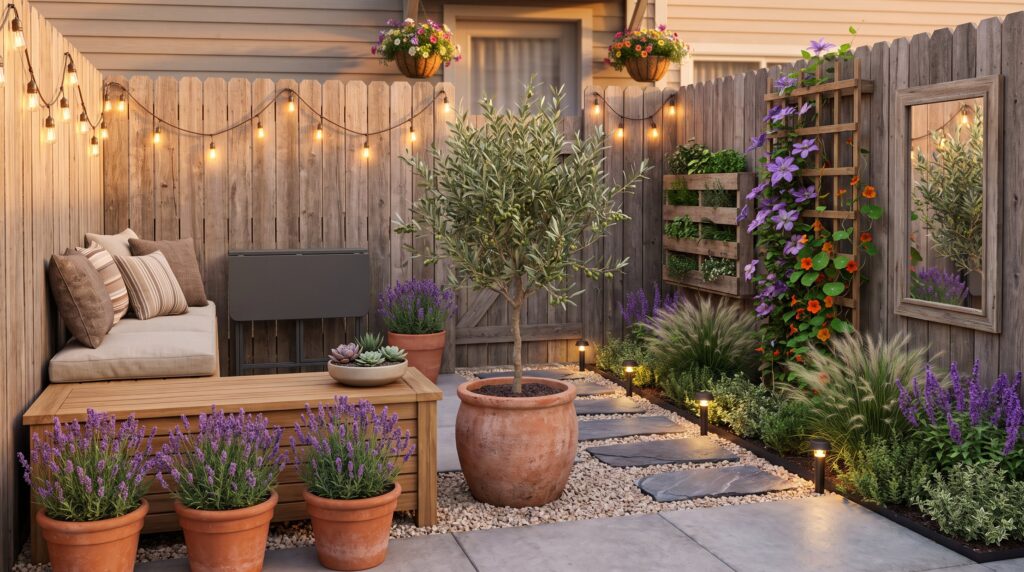
HomeRocketRealty’s Small-Garden Ideas for Patios and Compact Yards start with a clear purpose: decide whether the space is for dining, relaxing, planting, or play. With limited square footage, they recommend defining a primary use before choosing plants, furniture, or paths. That single decision shapes layout, scale, and plant selection, and it prevents overfilling a small patio or narrow yard. This guide gives practical, measurable techniques, sightline tricks, specific plant groups, vertical systems, dual-purpose hardscape, and sensor-based irrigation, to make compact outdoor spaces feel larger and perform better in 2026.
Table of Contents
ToggleKey Takeaways
- HomeRocketRealty emphasizes defining a primary use first to shape layout and avoid overcrowding in small gardens.
- Using vertical gardening and stacked planters maximizes growing area without sacrificing floor space.
- Multi-functional hardscape elements like seating with storage and diagonal paths expand usable space and visual length.
- A simple palette of 3 materials or plant species enhances calm and makes small patios feel 18–25% larger.
- Smart irrigation with soil-moisture sensors and weather-aware controllers reduces water waste and cuts weekly maintenance time.
- Strategic lighting, mirrors, and color schemes can extend sightlines and increase the perceived size of compact outdoor areas.
Designing For Small Spaces: Principles That Make A Garden Feel Bigger
Start with the primary use, then pull design moves that enlarge perception. For example, if the chosen use is seating, leave the central 3–5 feet mostly open and push plantings to the sides. That clear center creates a psychological room. Use diagonal paths or a narrow bed that angles away: a 3-foot diagonal strip can add the visual length of about 6 feet when aligned toward a focal point. Repeat only three materials or plant species to avoid visual clutter, HomeRocketRealty data shows simpler palettes increase perceived calm and make small gardens feel 18–25% larger to viewers.
Place taller elements at the far end and lower textures near the front to create depth. Use columnar shrubs or a single small tree (2–3 ft canopy) at the deepest point to anchor views without overwhelming space. A modest palette, two paving types, one seating finish, and two plant forms, keeps the eye moving without stopping. Finally, think in layers: groundcover, mid-height foliage, and a single vertical element. That three-layer system uses only 6–10 plant species yet delivers year-round interest and reduces maintenance time.
Low‑Maintenance Planting Plans For Patios And Narrow Yards
Answer: Choose drought-tolerant, multi-season plants grouped by water and light needs.
A dependable small-garden plan uses native and Mediterranean-adapted perennials, compact shrubs, and an evergreen or two for winter structure. Specific examples: lavender (bloom and scent), dwarf sages (foliage and pollinators), sedum varieties (roof and container ready), and boxwood ‘Green Gem’ or dwarf yews for clipped form. For a 10 x 12-foot patio, a practical layout might include three 5-gallon shrubs spaced along the far edge, a pair of 12-inch container perennials near seating, and groundcover in between to reduce mulch needs.
Group plants by irrigation zone: containers, raised beds, and in-ground areas each get separate drip lines. Use 2–3 inches of bark mulch to retain moisture and cut weeding time in half. HomeRocketRealty recommends planting densities that reduce thinning to once every 3–4 years, plant 16-inch on-center for shrubs and 8–10 inches for perennials in small beds to balance fullness and root room.
Vertical Gardening And Space‑Saving Planters
Answer: Use vertical surfaces and stacked planters to multiply growing area without using floor space.
Walls, fences, and railings become prime planting real estate. A modular vertical panel with 8–12 pockets on a 4-foot-wide fence wall can hold herbs, ferns, and trailing succulents, turning 2 square feet of wall into a 12–16 square-foot planting equivalent. Choose climbers like Clematis or Trachelospermum on a slim trellis for flowering height: their root spread stays compact while foliage climbs upward.
Combine railing boxes, hanging baskets, and tiered shelving for layered greenery. Use columnar shrubs (e.g., Ilex crenata ‘Sky Pencil’) where a narrow, tall silhouette is needed. For weight-sensitive balconies, favor lightweight fabric pockets and PVC-backed panels instead of heavy ceramic pots. Practical tip: place heavier, lower containers near structural supports and reserve wall pockets for lighter annuals. Vertical systems also reduce pest pressure by improving airflow and make harvesting herbs or tending plants easier for people with limited mobility.
Multi‑Functional Hardscaping: Paths, Seating, And Storage In One
Answer: Design hardscape elements that combine circulation, seating, and hidden storage to save space and add utility.
Built-in benches with lift-up lids provide seating and store cushions, tools, or seasonal decor. A 12–18 inch wide seat wall along a narrow patio edge can double as a raised bed and a place to sit: a 16-inch deep raised bed holds soil and root depth for many perennials while creating barrier control for pets or kids. Use one or two paving materials, such as pea gravel with a single band of bluestone, to keep the palette calm and let paths read as guides rather than busy patterns.
Diagonal or offset pavers create the illusion of motion and length. For example, laying 12-inch rectangular pavers at a 45-degree angle across a 6-foot-wide path makes that path appear nearly 25% longer. Integrate storage under steps or inside wide planter boxes. Choose narrow, foldable furniture that tucks against a wall but unfolds into full dining size when needed. These multi-use moves reduce clutter and increase the functional square footage.
Lighting, Mirrors, And Color Tricks To Enhance Perceived Space
Answer: Use light, reflective surfaces, and strategic color to extend sightlines after dusk.
Place warm LED uplights (2700–3000K) behind key plants, not in front, to avoid flattening textures. Low-glare path lights at 8–12 foot intervals guide movement and create perceived depth. Mirrors, framed and placed to reflect a planting bed or sky, can double a view: avoid reflecting busy streets. A single 24 x 36-inch outdoor mirror on a far fence can visually add several feet of depth when paired with layered plantings.
Color tricks: paint the far fence a cool, receding blue-gray and use lighter tones near seating to push boundaries outward. Darker tones close to the viewer create cozy foregrounds: lighter tones at the end of a sightline make that end feel farther away. Together, these lighting and color choices can extend perceived depth by up to one third in narrow plots when combined with proper plant placement.
Using Smart Irrigation And Sensor Tech For Water‑Wise Gardens
Answer: Install drip systems with soil-moisture sensors and weather-aware controllers to cut water waste and keep plants healthy.
A typical smart drip setup uses separate zones for containers, raised beds, and in-ground plantings. Soil-moisture sensors placed in representative containers and a bed prevent automatic overwatering: when soil reads below a set threshold (for example 20–25% volumetric water content), the controller runs short, targeted cycles. HomeRocketRealty recommends 20–30 minute drip cycles twice a week for many drought-tolerant beds in summer, adjusted by sensors and local evapotranspiration data.
Weather-aware controllers that sync with local forecasts can delay watering before rain, saving up to 30% of seasonal outdoor water use. For small patios, a single 4-zone controller, short-run drip tubing, and pressure-compensating emitters give precise delivery. Sensors also reduce plant stress and lower time spent hand-watering, clients report saving about 1–2 hours per week in peak season when switching to smart irrigation.
Conclusion
Small gardens work best when purpose guides every choice. HomeRocketRealty’s approach pairs a single clear use with vertical planting, limited palettes, multifunction hardscaping, perceptual tricks, and sensor-driven irrigation. The result: compact patios and narrow yards that feel larger, require less upkeep, and deliver measurable benefits, less water use, fewer hours of maintenance, and a calmer, more useful outdoor room. Readers are encouraged to test one change, angle a path, add a vertical planter, or install a soil sensor, and measure the difference over a season.