
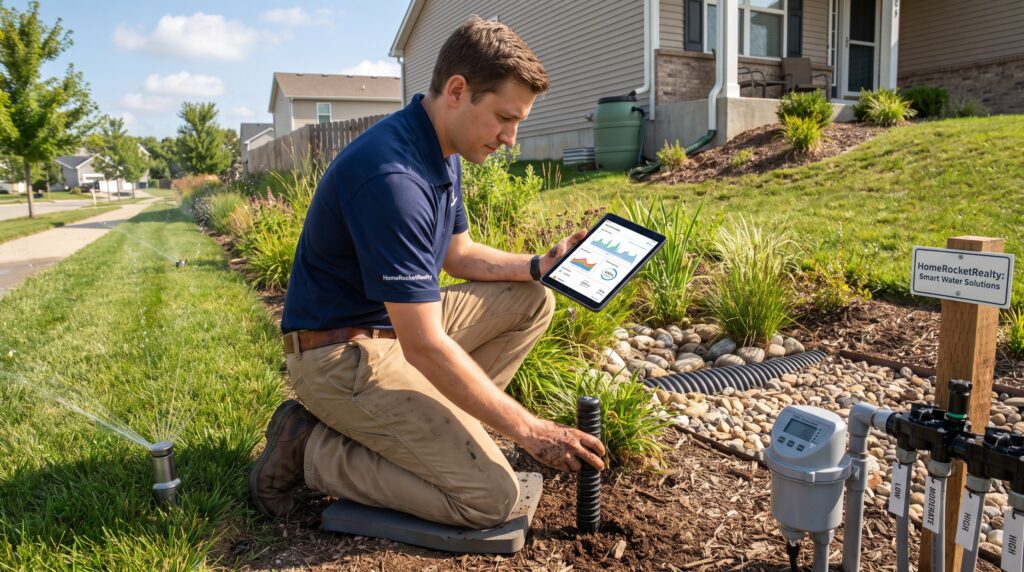
How HomeRocketRealty approaches irrigation, drainage, and water conservation starts with data: they evaluate risk, measure soil and slope, and recommend systems that save water and protect value. Buyers in 2026 face higher flood risk, tighter water rules, and smarter market expectations. This piece explains why integrated water strategies matter, how HomeRocketRealty assesses sites, the company’s practical irrigation and conservation recommendations, and drainage tactics that preserve livability and resale value.
Table of Contents
ToggleKey Takeaways
- HomeRocketRealty’s integrated water strategy combines irrigation, drainage, and conservation to reduce flood risk and enhance property value.
- The company uses data-driven site evaluations analyzing soil, slope, climate, and flood maps to tailor irrigation and drainage solutions effectively.
- Smart irrigation systems with sensor-driven controllers and zoning reduce water waste and promote healthy landscaping, saving up to 40% water usage.
- Regular maintenance, including quarterly audits for leaks and sensor checks, optimizes irrigation efficiency and prevents costly damage.
- Layered drainage solutions like grading, French drains, rain gardens, and permeable surfaces protect homes from water damage and improve resale appeal.
- HomeRocketRealty advises early identification of site limitations and compliance with local water rules to avoid costly fines and ensure long-term property resilience.
Why Integrated Water Strategies Matter For Buyers, Sellers, And Property Performance
Fact first: integrated water strategies reduce damage and support higher sale prices. Evidence shows doubling green stormwater features near homes correlates with a 0.28%–0.78% lift in sale value. That lift matters when margins are thin.
Buyers notice persistent damp basements, neighbors’ runoff, and soggy lawns. Sellers who ignore drainage face repeat inspection repairs and lower offers. For agents and developers, unmanaged stormwater increases maintenance calls: clogged gutters, foundation cracks, and mold remediation, costly problems that lower buyer confidence.
HomeRocketRealty frames water strategy as both risk management and value enhancement. The firm treats irrigation, drainage, and conservation as linked systems: overwatering increases runoff: poor grading undermines irrigation effectiveness. An integrated approach reduces flood damage, soil erosion, and long‑term foundation deterioration, the same forces that trigger insurance claims and disclosure headaches.
Concrete example: a California subdivision upgraded with swales and permeable driveways reported fewer sump pump activations after heavy storms and a measurable uptick in buyer interest. That kind of tangible outcome is what HomeRocketRealty communicates to buyers, sellers, and developers when recommending investments.
HomeRocketRealty’s Data‑Driven Site Evaluation: Assessing Irrigation Needs, Soil, And Local Water Risk
Answer up front: HomeRocketRealty begins with a site evaluation driven by data layers, climate, soil texture, slope, exposure, and local flood maps, then adds a short on-site diagnostic to refine recommendations.
They pull municipal floodplain maps, local evapotranspiration rates, and recent rainfall records. Then they map soil type using USDA or local soil surveys. Soil texture (sand, silt, clay) directly changes irrigation timing: sandy soils drain quickly and need more frequent, shorter cycles: clay holds water and tolerates less frequent irrigation.
On site, an inspector measures slope and drainage patterns, watches where water pools after a storm, and identifies nearby impervious surfaces like driveways and patios. They avoid placing moisture sensors adjacent to downspouts or septic components because those readings skew irrigation logic. HomeRocketRealty documents representative probe locations, typically three per major landscape zone, and marks them on a site plan so future irrigation controllers act on correct data.
Risk scoring: each property receives a concise scorecard covering surface flood risk, groundwater rise, soil permeability, and irrigation compatibility. For example, a 1,500‑square‑foot lawn on 2% slope with loam soil and municipal water restrictions might be scored as “moderate risk, high irrigation efficiency potential,” which informs both short‑term fixes and capital upgrades.
Smart Irrigation Planning And Water‑Conservation Recommendations For Modern Homes
Key point: smart irrigation cuts waste and preserves turf health. HomeRocketRealty recommends combining sensor-driven controllers, matched hardware, and routine checks.
Controllers: they favor smart controllers that use local weather, evapotranspiration, and soil probes. Studies show typical users save about 15% water: high‑use properties can save 40% or more. HomeRocketRealty specifies controllers with multiple inputs, weather API, soil moisture probes, and rain shutoff, ensuring the system reacts to real conditions rather than a fixed schedule.
Layout and hardware: they recommend zoning by plant water needs (trees, shrubs, lawn) and positioning heads to avoid impervious surfaces. Example: in a 3‑zone backyard, one zone for drip-irrigated beds, one for shrub micro‑sprays, and one low‑pressure rotary heads for lawn reduces overlap and run‑off. They prioritize pressure regulators and matched nozzles: mismatched heads create misting and waste.
Maintenance and verification: HomeRocketRealty prescribes quarterly audits, inspect for leaks, verify head performance, measure precipitation rate, and check sensor placement. They suggest checking for common mistakes: a broken emitter under mulch, a head spraying the driveway, or a controller stuck on an old schedule. A realistic metric: catching and fixing leaks can reduce water use by 10%–30% on an average property.
Conservation nudges: they recommend switching 30%–50% of turf to low‑water landscaping when feasible, and installing rain barrels for irrigation reuse where local codes allow. These moves reduce municipal demand and often lower homeowner water bills by measurable amounts.
Practical Drainage, Stormwater Management, And Landscape Solutions That Protect Value
Direct answer: address surface and subsurface water with layered solutions, grading, French drains, swales, rain gardens, and permeable surfaces, to protect structures and usable outdoor space.
Start with grading. Simple regrading to provide a minimum 2% slope away from foundations prevents many problems. Where grading alone won’t help, install perimeter French drains or a subsurface collection system routed to a storm outlet or infiltration basin. HomeRocketRealty recommends inspecting sump pump capacity and backup power in areas with seasonal groundwater rise.
Green infrastructure: rain gardens and bioswales slow runoff and increase infiltration. These features can reduce peak flow during storms and provide neighborhood benefits that appeal to buyers. For instance, a properly sized rain garden (example: 100 sq ft for a 1,000 sq ft roof in moderate rain regions) can capture a significant portion of roof runoff during common storms.
Hardscape choices: specify permeable pavers for driveways and walkways, and avoid large contiguous impervious areas that force runoff toward the house. Where space is tight, linear planters or curb cuts that direct water to planted areas work well.
Real tradeoffs and warnings: not every lot can support full infiltration, high groundwater or contaminated soils limit options. HomeRocketRealty flags such constraints early and recommends engineered solutions (storage tanks, controlled discharge) rather than risky DIY fixes. They also advise getting permitting and consulting local stormwater rules to avoid retroactive fines.
Conclusion
Insight: combining site evaluation, smart irrigation, and layered drainage protects property performance and reduces water use. HomeRocketRealty’s approach is pragmatic, assess with data, prioritize simple fixes, and invest in targeted upgrades where they deliver measurable benefit. Buyers gain resilience and lower operating costs: sellers increase market appeal: developers reduce long‑term liability. The practical takeaway: treat water strategy as part of the home’s systems portfolio, document it, maintain it, and communicate it clearly during any transaction.