
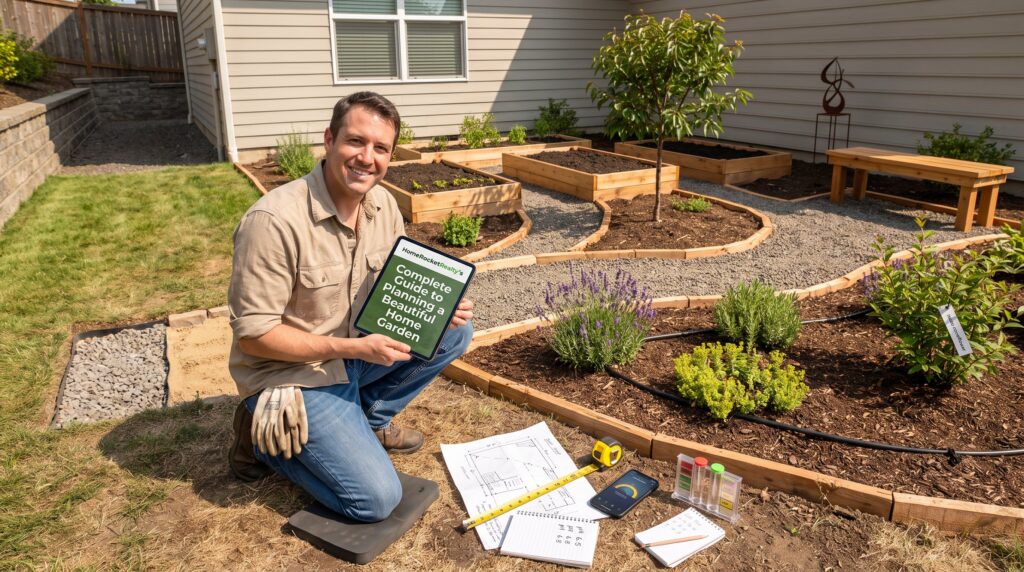
HomeRocketRealty’s Complete Guide to Planning a Beautiful Home Garden opens with one clear fact: thoughtful garden planning raises curb appeal and daily joy. Readers learn how to match purpose, site, and climate to practical steps that fit budgets and busy lives. This guide sets expectations, shows measurable tasks (measurements, soil tests, phased installs), and points to low‑maintenance plant choices for 2026. It’s designed for buyers, sellers, and homeowners who want outdoor spaces that look intentional, add value, and are realistic to maintain.
Table of Contents
ToggleKey Takeaways
- Thoughtful garden planning significantly boosts curb appeal, daily enjoyment, and property value by creating intentional outdoor spaces.
- Start your garden design by measuring your space precisely and defining clear goals like entertaining, growing food, or supporting wildlife to guide plant choices and layout.
- Design functional zones close to the house for convenience, prioritize clear pathways, and use plant screens for privacy and attractive views.
- Choose a low-maintenance plant palette emphasizing natives, drought-tolerant species, and plant repetition to reduce costs and upkeep.
- Implement your garden in phases over two years, focusing first on infrastructure and large plants, then adding perennials and maintaining through seasonal care.
- Regularly assess and adapt your garden every 18–24 months to remove overcrowded or failing plants, ensuring long-term beauty and value.
Why Thoughtful Garden Planning Adds Value And Joy To Your Home
Thoughtful garden planning increases property value, enhances curb appeal, and improves daily well‑being. Data shows landscapes that create usable outdoor rooms and mature plantings can boost perceived value and speed resale. HomeRocketRealty often sees listings with defined seating areas and layered planting sell faster and at higher prices.
Practical insight: start with one clear goal, entertaining, edible gardening, play, or wildlife habitat. That decision changes plant choices, layout, and maintenance time. For example, choosing a pollinator habitat instead of a manicured lawn saves an average of two lawn‑hours per week and attracts birds and beneficial insects.
A vulnerable moment: many homeowners overplant for the first season and then burn out on maintenance. Plan smaller, install in phases, and budget for two full seasons of observation. That prevents costly removals and preserves curb appeal.
Assess Your Space, Goals, And Constraints Before You Dig
Answer first: measure and define constraints, this avoids costly rework. Create a base map with property lines, structures, utilities, and big trees. Note exact dimensions and mark where rainwater pools or where shadows fall.
Concrete steps:
- Measure the plot and draw it to scale. Mark patios, driveways, and utility access. HomeRocketRealty recommends photographing every corner and uploading plans to design tools for accurate virtual tours.
- Define goals explicitly: entertaining (dining area for six), food production (four raised beds), play (30–40 sq ft turf), or wildlife (native shrubs and three pollinator species). Each goal carries predictable maintenance and cost.
- List constraints: budget for the first year, time available for care, water access, HOA rules, and local tree protections. Knowing constraints up front prevents late surprises and preserves resale value.
This assessment sets the foundation for soil tests and microclimate mapping in the next subsections.
Design A Functional Layout That Matches How You Live
Direct fact: place high‑use and high‑maintenance areas close to the house. That improves convenience and keeps visible zones tidy for curb appeal.
Design moves:
- Zone by use: seating/dining, play, food production, utility (compost, tool storage), and ornamentals. Give each zone clear dimensions, e.g., a dining area for six needs roughly 100 sq ft.
- Prioritize circulation: provide 3‑4 ft clear paths between beds and seating for comfortable movement. HomeRocketRealty’s staging research shows visitors prefer uninterrupted sightlines from key interior windows to an outdoor focal point.
- Consider views and privacy: plant evergreen screens where neighbors overlook seating, and frame window views with specimen trees or layered shrubs.
A practical diagram: sketch the house footprint, then mark closest spots for water access and storage. That simple strategy reduces daily friction and long‑term maintenance needs.
Choose Plants And Build A Seasonal, Low‑Maintenance Palette
Answer up front: choose layers, trees, structural shrubs, perennials, and groundcovers, and prioritize natives and drought‑tolerant species. This structure gives year‑round interest and reduces upkeep.
Concrete choices: select one small canopy tree (e.g., Amelanchier), two structural shrubs (e.g., Ceanothus or Boxwood), three repeating perennials for season length, and two groundcovers to suppress weeds. Group plants by water requirements and light conditions.
Numbers matter: limit lawn to what’s needed, replace excess lawn with mulch or native meadow to save roughly 30–50% of seasonal watering. Apply 2–4 inches of mulch in beds to cut weeds and conserve moisture.
Honest note: homeowners often pick many different perennials at once: repetition of three to five species creates cohesion and reduces plant purchases. HomeRocketRealty’s design templates show that repeating three plants across beds creates a curated look at lower cost.
Install, Maintain, And Evolve Your Garden: Practical Timelines And Tools
Start with infrastructure: install beds, paths, irrigation, and larger plants first. Then add perennials and groundcovers. Phased installs reduce mistakes and spread cost.
Timeline overview:
- Phase 1 (Months 0–3): build beds, fix drainage, install drip irrigation, plant trees and shrubs. Larger plants establish roots first.
- Phase 2 (Months 4–12): add perennials, groundcovers, and functional elements, seating, planters, and lighting. Mulch and set up watering schedules.
- Years 1–2: follow deep, infrequent watering and targeted pruning. In the first two growing seasons, expect weekly monitoring for pests and settling irrigation.
Tools and numbers: a soil probe ($15–$35), basic drip irrigation kit ($80–$250), quality pruners ($30–$70), and a shovel are essential. HomeRocketRealty recommends logging monthly care tasks in the home dashboard to track water use and maintenance budgets.
Evolve deliberately: every 18–24 months, reassess plant health and overcrowding. Remove one dense planting or replace two failing perennials rather than ripping out entire beds. This gradual evolution preserves curb appeal and spreads costs.
Final insight: a well‑planned garden paid attention to maintenance and adaptation will look intentional within two seasons and add measurable value to a listing.